 ≥99% Purity
Melanocortin & Hormonal
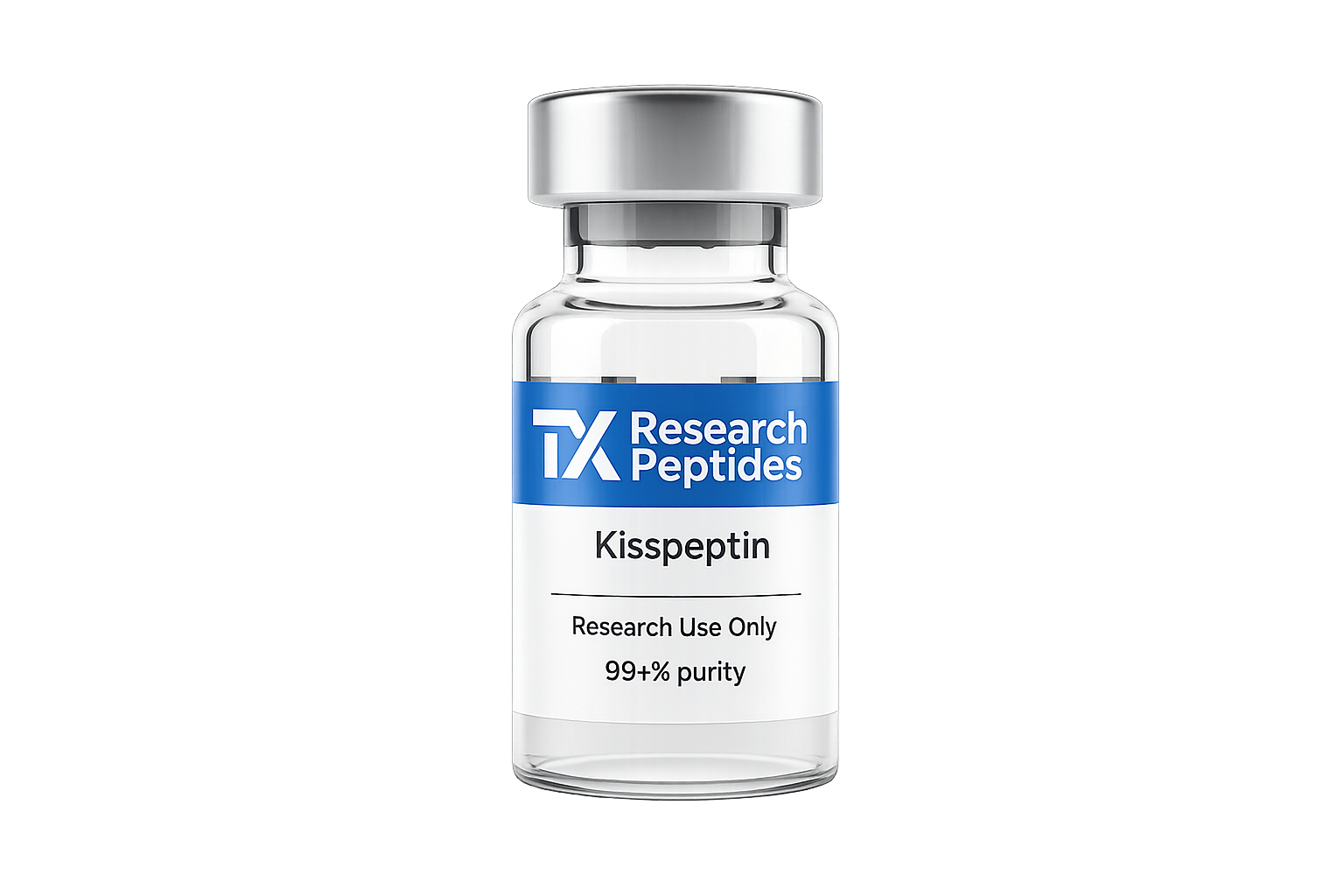
Kisspeptin
Hypothalamic peptide investigated in reproductive endocrinology.
Strength
💰 Mix & match bundle pricing
5+ vials 15% off · 10+ vials 25% off
Any mix of products counts — the discount applies to your whole cart at checkout. (Supplies like bacteriostatic water don't count.)
Need larger volumes? Bulk & wholesale pricing available — apply for wholesale.
About this compound
Molecular Specifications
Kisspeptin is a family of neuropeptides encoded by the KISS1 gene. The KISS1 gene product undergoes proteolytic processing to generate kisspeptin isoforms of varying length: kisspeptin-54 (primary circulating form), kisspeptin-14, kisspeptin-13, and kisspeptin-10. All forms share the same C-terminal decapeptide sequence, which is the receptor-binding domain.
GPR54 / KISS1R and GnRH Regulation
Kisspeptin is the primary endogenous agonist for GPR54 (KISS1R) — a Gq/11-coupled GPCR expressed in hypothalamic GnRH neurons, pituitary gonadotrophs, and peripheral tissues. Kisspeptin neurons in the arcuate nucleus and anteroventral periventricular nucleus (AVPV) project to GnRH neurons and are the primary upstream regulators of pulsatile GnRH release.
The essential nature of kisspeptin/GPR54 signaling for reproductive function was established when loss-of-function mutations in KISS1 or KISS1R were found to cause hypogonadotropic hypogonadism in humans and mice — one of the most significant reproductive neuroendocrinology discoveries of the past two decades.
↗ Seminara SB et al. (2003). The GPR54 gene as a regulator of puberty. NEJM. PubMed: 14563827
Research Applications
- GPR54 receptor pharmacology and binding studies
- GnRH pulse generation and HPG axis mechanism research
- Puberty onset and reproductive biology
- Hypogonadotropic hypogonadism model research
- Female estrous cycle regulation research
- Steroidogenesis pathway research downstream of LH/FSH release
Storage & Handling
Store lyophilized powder at −20°C for long-term stability; short-term 2–8°C is acceptable. Reconstitute with bacteriostatic water; keep refrigerated at 2–8°C after reconstitution and use within typical research timelines.
For laboratory and research use only. Not for human or veterinary use, diagnostic, or therapeutic applications. Statements have not been evaluated by the FDA.
Research Disclaimer: The information below is provided for laboratory and research-use-only educational purposes. It is not medical advice. Kisspeptin is not intended for human or veterinary use, diagnosis, or therapy, and statements have not been evaluated by the FDA.
Compound Overview
What is Kisspeptin?
Research Applications
Kisspeptin in research models
Mechanism of Action
Receptor & pathway interactions studied
Purity & Testing
HPLC + mass-spec verification
Storage & Reconstitution
Handling lyophilized peptides
Researchers typically reconstitute with bacteriostatic water. Browse research supplies →
Frequently Asked
Kisspeptin research FAQ
What purity is Kisspeptin tested to?+
Every batch of Kisspeptin is tested by HPLC for purity (≥99% by area) and confirmed by mass spectrometry. The lot-specific Certificate of Analysis is available on this product page.
Is Kisspeptin intended for human use?+
No. Kisspeptin is supplied strictly for laboratory and research-use-only investigation. It is not intended for human or veterinary use, diagnosis, or therapy.
How should Kisspeptin be stored?+
Store the lyophilized powder at −20°C for long-term stability. After reconstitution with bacteriostatic water, store at 2–8°C and use within typical research timelines.
Do you ship within the United States?+
Yes. TX Research Peptides ships Kisspeptin domestically within the US with flat-rate shipping. Orders ship from the US for fast delivery to research labs.
Continue researching
Related compounds
Customer Reviews
What researchers say about Kisspeptin
—
Be the first to review
Loading reviews…
Related Compounds