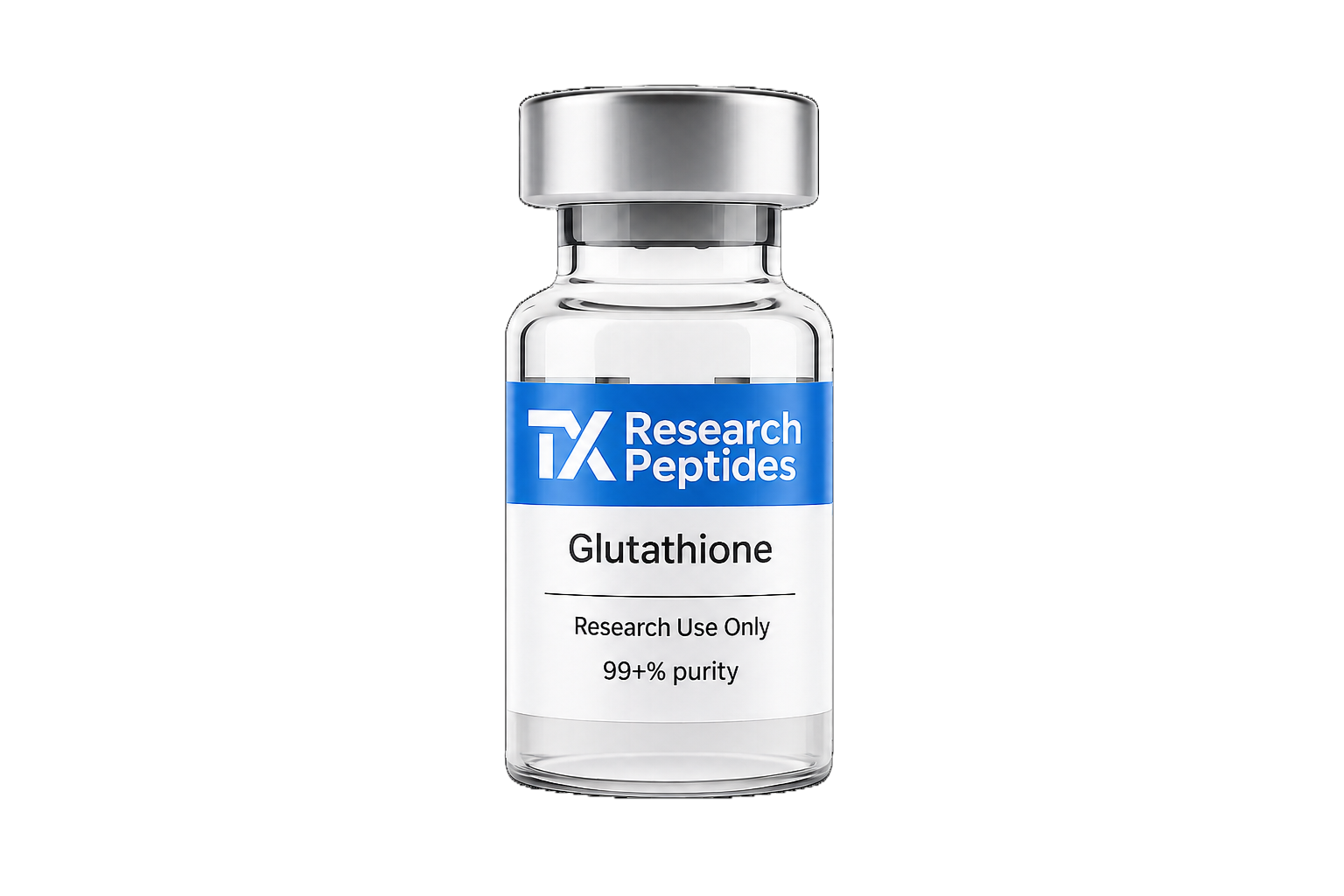
 ≥99% Purity
Cognitive & Longevity
Glutathione
Tripeptide antioxidant studied in cellular oxidative-stress research.
Strength
💰 Mix & match bundle pricing
5+ vials 15% off · 10+ vials 25% off
Any mix of products counts — the discount applies to your whole cart at checkout. (Supplies like bacteriostatic water don't count.)
Need larger volumes? Bulk & wholesale pricing available — apply for wholesale.
About this compound
Molecular Specifications
Glutathione (GSH; γ-Glu-Cys-Gly) is the most abundant intracellular low-molecular-weight antioxidant in mammalian cells, present at millimolar concentrations across most cell types. Its unique γ-glutamyl linkage confers resistance to degradation by most cellular peptidases, allowing accumulation at high intracellular concentrations. Glutathione is the central substrate for the glutathione peroxidase (GPx) and glutathione S-transferase (GST) enzyme families, and is essential for cellular redox homeostasis, xenobiotic detoxification, and immune function.
Redox Chemistry — GSH/GSSG Cycle
Glutathione exists in two primary forms: reduced (GSH) and oxidized (GSSG — glutathione disulfide). GPx enzymes use GSH to reduce hydroperoxides (H₂O₂, lipid hydroperoxides) to water and lipid alcohols, with GSH becoming oxidized to GSSG. Glutathione reductase regenerates GSH from GSSG using NADPH, completing the redox cycle. The GSH/GSSG ratio is a widely used quantitative index of cellular oxidative stress in research models.
↗ Meister A, Anderson ME. (1983). Glutathione. Annual Review of Biochemistry. PubMed: 6137189
Research Applications
- Oxidative stress quantification via GSH/GSSG ratio measurement
- ROS scavenging pathway studies — H₂O₂ and lipid peroxide models
- Hepatocyte detoxification and xenobiotic metabolism research
- Immune cell function studies (T-cell activation, NK cell activity)
- Neuroprotection and neurodegeneration oxidative pathway research
- Ferroptosis pathway research — GSH depletion models
- Cancer biology — GSH-mediated drug resistance mechanisms
Storage & Handling
Store lyophilized powder at −20°C for long-term stability; short-term 2–8°C is acceptable. Reconstitute with bacteriostatic water; keep refrigerated at 2–8°C after reconstitution and use within typical research timelines.
For laboratory and research use only. Not for human or veterinary use, diagnostic, or therapeutic applications. Statements have not been evaluated by the FDA.
Research Disclaimer: The information below is provided for laboratory and research-use-only educational purposes. It is not medical advice. Glutathione is not intended for human or veterinary use, diagnosis, or therapy, and statements have not been evaluated by the FDA.
Compound Overview
What is Glutathione?
Research Applications
Glutathione in research models
Mechanism of Action
Receptor & pathway interactions studied
Purity & Testing
HPLC + mass-spec verification
Storage & Reconstitution
Handling lyophilized peptides
Researchers typically reconstitute with bacteriostatic water. Browse research supplies →
Frequently Asked
Glutathione research FAQ
What purity is Glutathione tested to?+
Every batch of Glutathione is tested by HPLC for purity (≥99% by area) and confirmed by mass spectrometry. The lot-specific Certificate of Analysis is available on this product page.
Is Glutathione intended for human use?+
No. Glutathione is supplied strictly for laboratory and research-use-only investigation. It is not intended for human or veterinary use, diagnosis, or therapy.
How should Glutathione be stored?+
Store the lyophilized powder at −20°C for long-term stability. After reconstitution with bacteriostatic water, store at 2–8°C and use within typical research timelines.
Do you ship within the United States?+
Yes. TX Research Peptides ships Glutathione domestically within the US with flat-rate shipping. Orders ship from the US for fast delivery to research labs.
Continue researching
Related compounds
Customer Reviews
What researchers say about Glutathione
—
Be the first to review
Loading reviews…
Related Compounds