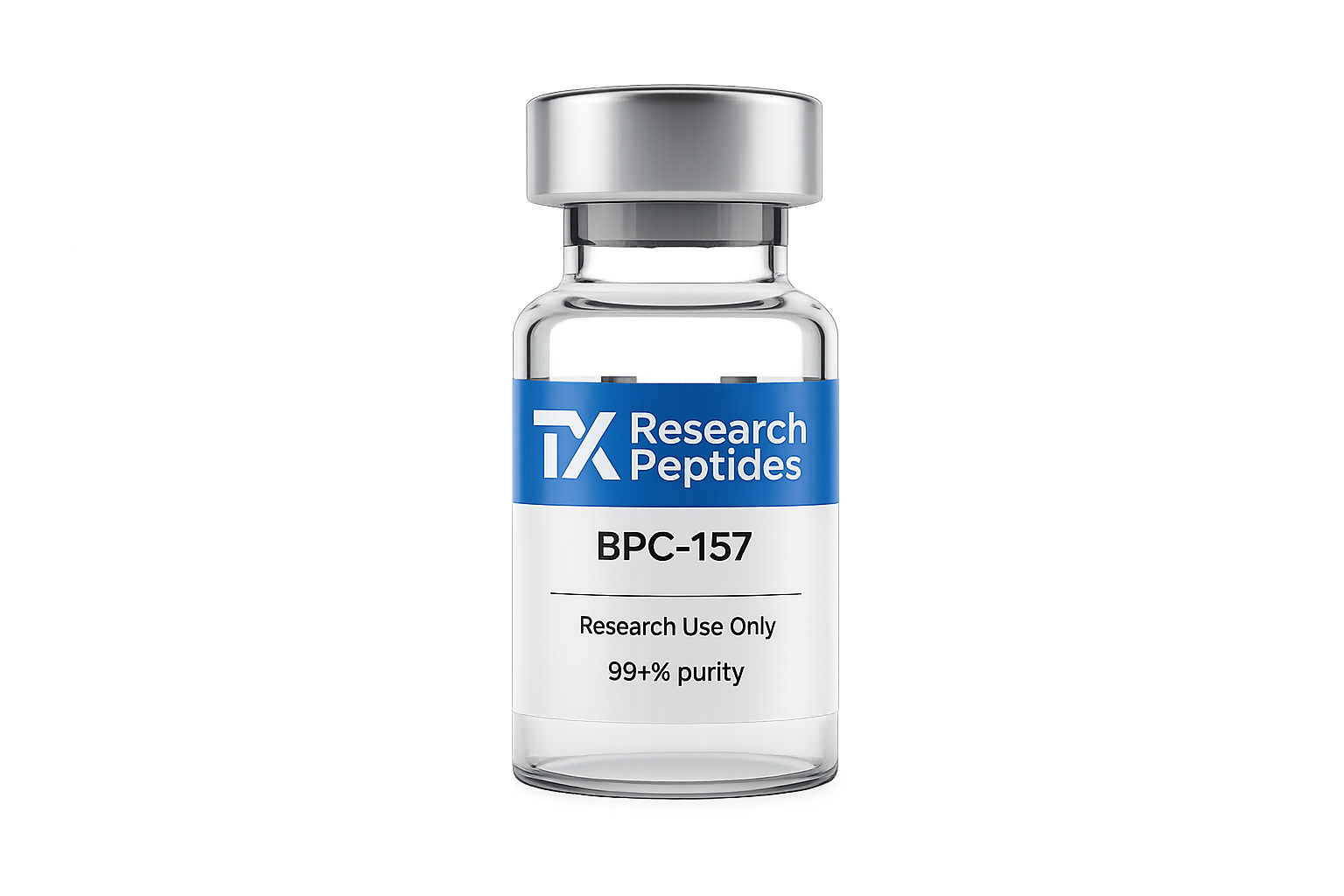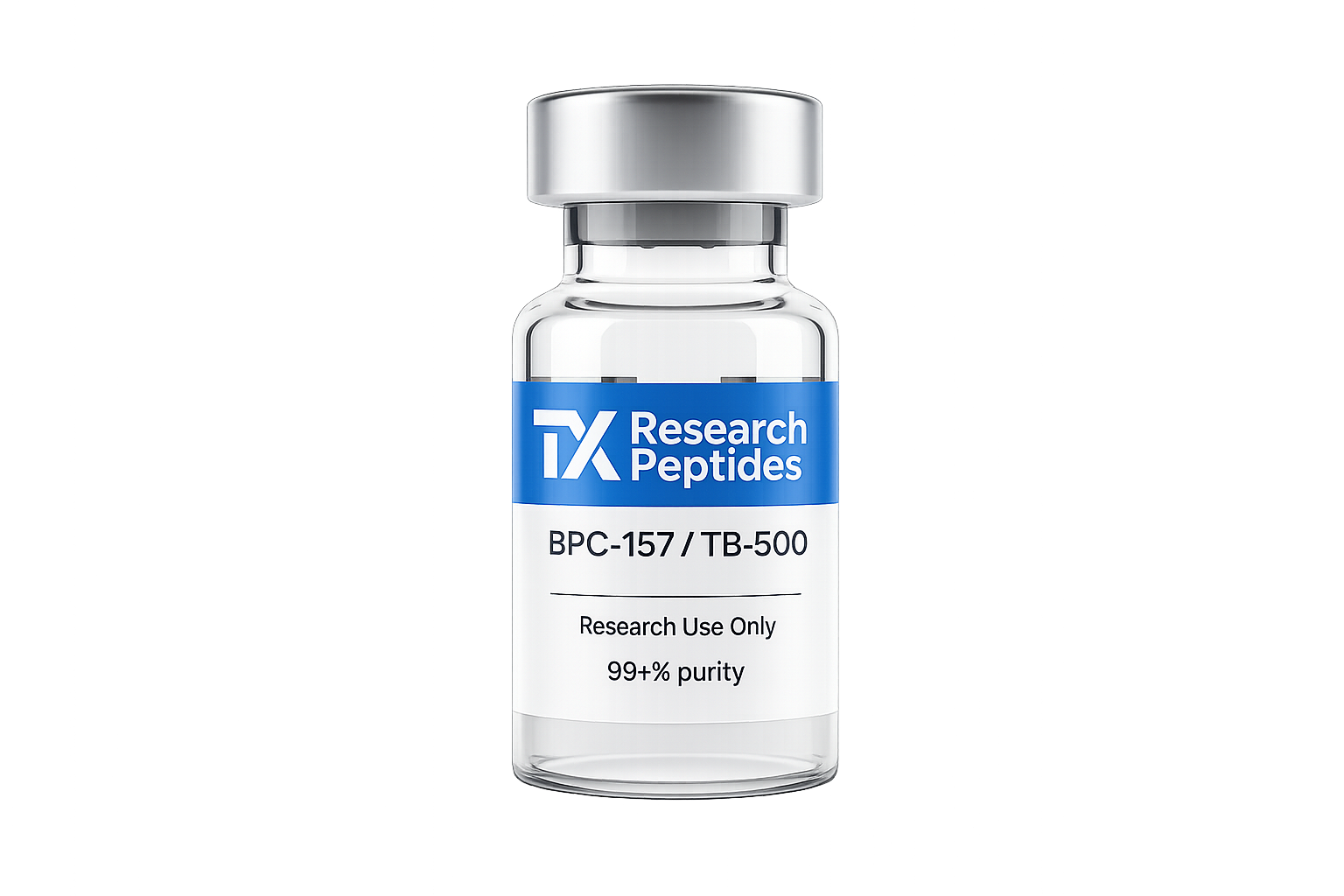
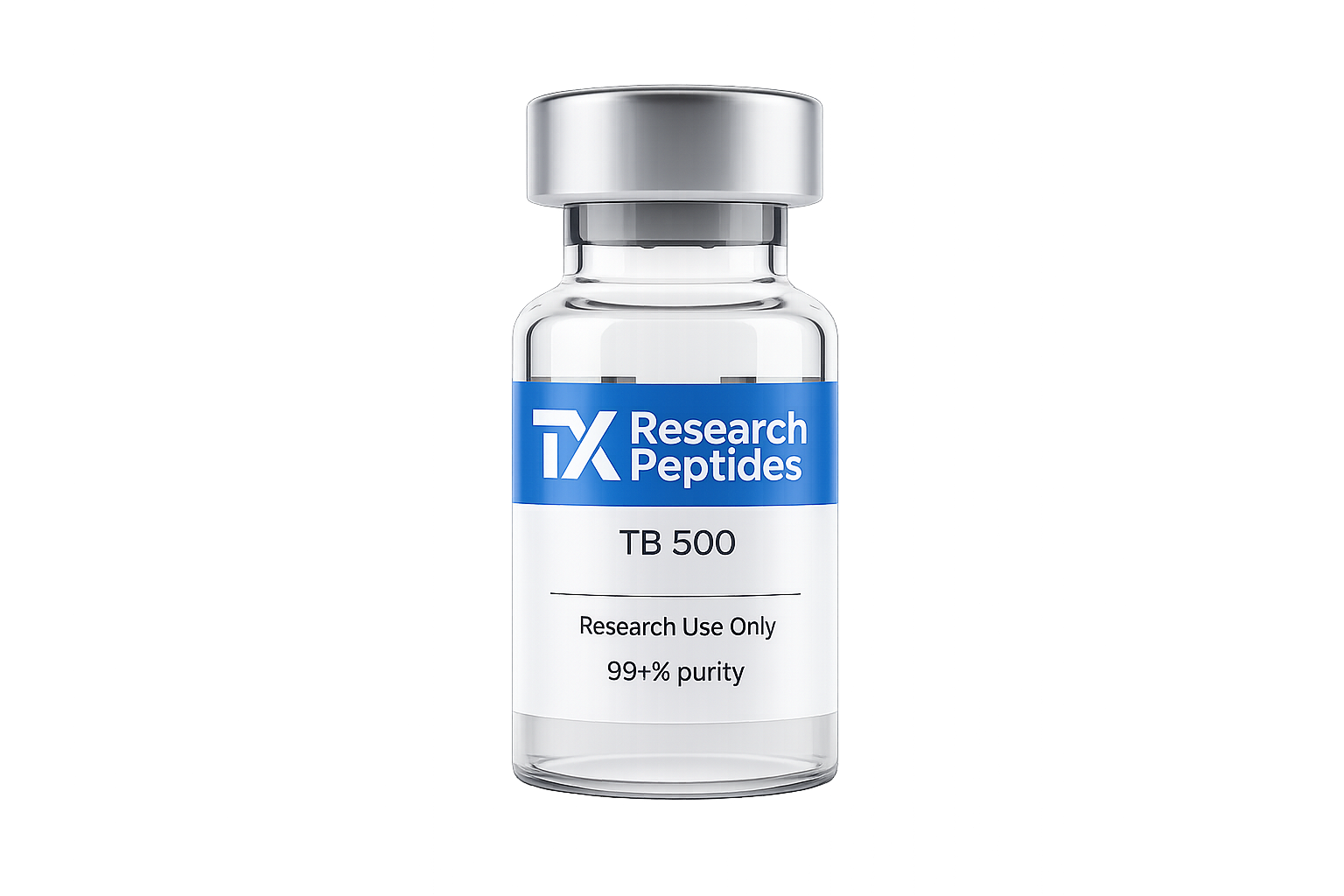
 ≥99% Purity
Regenerative & Repair
TB-500
Thymosin beta fragment studied for repair signaling and mobility research.
Strength
💰 Mix & match bundle pricing
5+ vials 15% off · 10+ vials 25% off
Any mix of products counts — the discount applies to your whole cart at checkout. (Supplies like bacteriostatic water don't count.)
Need larger volumes? Bulk & wholesale pricing available — apply for wholesale.
About this compound
Molecular Specifications
TB-500 is a synthetic peptide corresponding to the actin-binding domain of thymosin beta-4 (Tβ4), specifically the heptapeptide sequence Ac-LKKTETQ (residues 17–23). Thymosin beta-4 is an endogenous 43-amino acid peptide found at high concentrations in platelets, white blood cells, and wound fluid. The TB-500 fragment has been identified in preclinical research as the region responsible for much of the parent peptide's observed biological activity in tissue repair, cellular migration, and actin dynamics models.
Actin Sequestration Mechanism
TB-500's primary mechanism is G-actin (globular actin) sequestration — regulation of the equilibrium between G-actin and F-actin (filamentous actin). Actin polymerization dynamics are fundamental to cell motility, wound contraction, and tissue remodeling. By modulating this equilibrium, TB-500 has been studied for its effects on cell migration rates in multiple cell types including myocytes, endothelial cells, and keratinocytes.
This actin-binding mechanism is mechanistically distinct from BPC-157's NO/growth factor pathways — the primary rationale for combining BPC-157 and TB-500 in multi-compound research models examining tissue repair cascades.
↗ Goldstein AL et al. (2005). Thymosin beta4: actin-sequestering protein moonlights to repair injured tissues. Trends Mol Med. PubMed: 15946907
↗ Smart N et al. (2007). Thymosin beta4 induces adult epicardial progenitor mobilization. Nature. PubMed: 17361131
Research Applications
- Actin polymerization dynamics and cytoskeletal biology
- Endothelial cell and myocyte migration studies
- Angiogenesis pathway research in preclinical models
- Cardiac tissue repair mechanism investigation
- Wound healing cascade — cellular migration component
- Neural repair pathway studies in animal models
- Combination studies with BPC-157 for multi-pathway repair models
Storage & Handling
Store lyophilized powder at −20°C for long-term stability; short-term 2–8°C is acceptable. Reconstitute with bacteriostatic water; keep refrigerated at 2–8°C after reconstitution and use within typical research timelines.
For laboratory and research use only. Not for human or veterinary use, diagnostic, or therapeutic applications. Statements have not been evaluated by the FDA.
Research Disclaimer: The information below is provided for laboratory and research-use-only educational purposes. It is not medical advice. TB-500 is not intended for human or veterinary use, diagnosis, or therapy, and statements have not been evaluated by the FDA.
Compound Overview
What is TB-500?
Research Applications
TB-500 in research models
Mechanism of Action
Receptor & pathway interactions studied
Purity & Testing
HPLC + mass-spec verification
Storage & Reconstitution
Handling lyophilized peptides
Researchers typically reconstitute with bacteriostatic water. Browse research supplies →
Frequently Asked
TB-500 research FAQ
What purity is TB-500 tested to?+
Every batch of TB-500 is tested by HPLC for purity (≥99% by area) and confirmed by mass spectrometry. The lot-specific Certificate of Analysis is available on this product page.
Is TB-500 intended for human use?+
No. TB-500 is supplied strictly for laboratory and research-use-only investigation. It is not intended for human or veterinary use, diagnosis, or therapy.
How should TB-500 be stored?+
Store the lyophilized powder at −20°C for long-term stability. After reconstitution with bacteriostatic water, store at 2–8°C and use within typical research timelines.
Do you ship within the United States?+
Yes. TX Research Peptides ships TB-500 domestically within the US with flat-rate shipping. Orders ship from the US for fast delivery to research labs.
Continue researching
Related compounds
Customer Reviews
What researchers say about TB-500
—
Be the first to review
Loading reviews…
Related Compounds