Research Guides
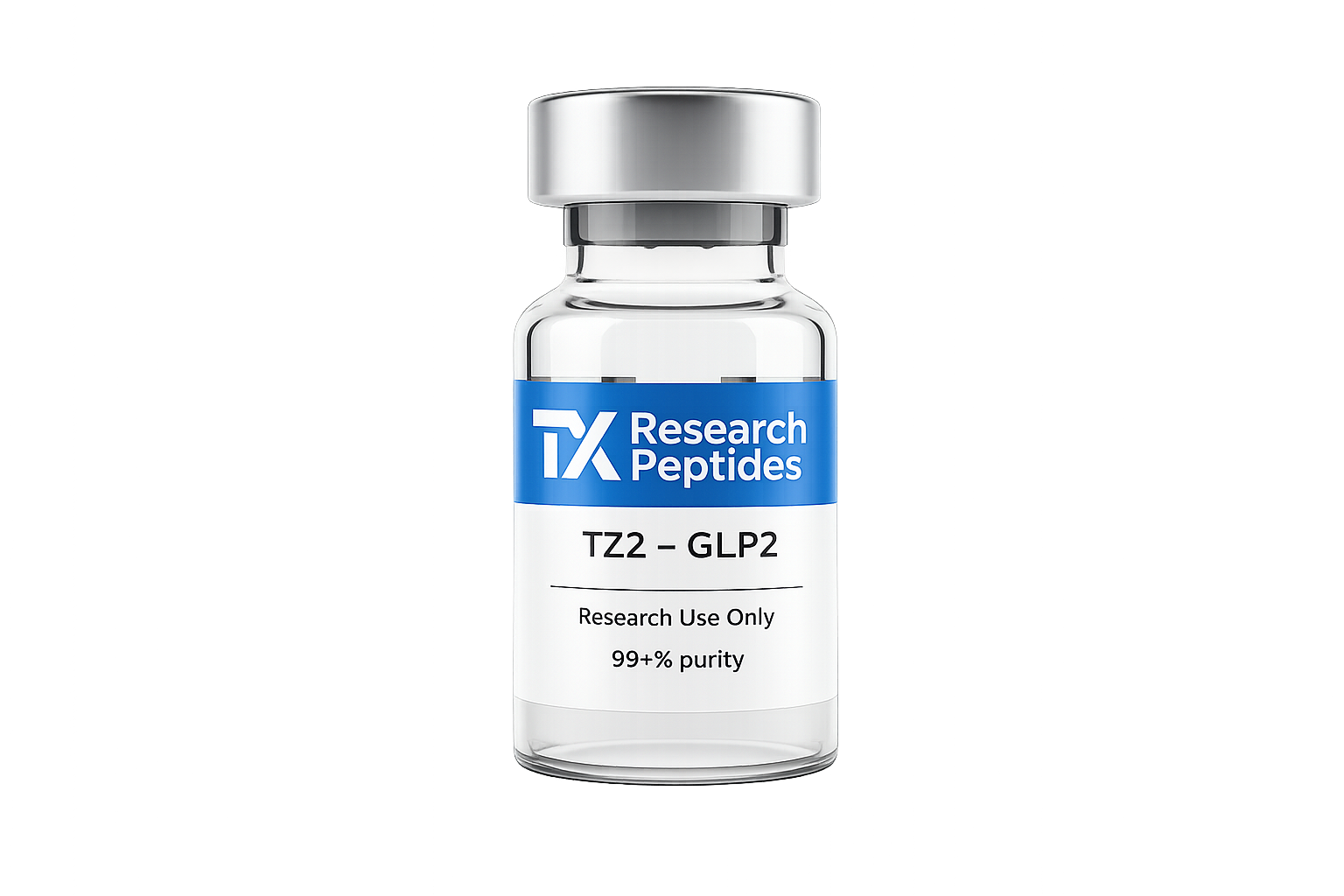
TZ2 – GLP2 vs GLP-1 (S) | Mechanism Comparison | TX Research Peptides
About the author: The TX Research Peptides editorial team curates research-use-only educational content reviewed for accuracy against published preclinical and clinical literature. All articles are framed strictly for laboratory research and are not medical advice.
Part of the pillar guide.
Research Disclaimer: Research-use-only educational content. Not medical advice. These materials are not for human or veterinary use. References to clinical research describe published developer studies, not any use of this research-grade material.
The Core Difference (Mechanism)
- GLP-1 (S) is a GLP-1 receptor agonist — a single incretin pathway.
- TZ2 – GLP2 is a dual GIP/GLP-1 receptor agonist — two incretin pathways in one molecule.
This receptor-engagement difference is the central distinction studied across the metabolic-research literature.
Research Context
Both molecules have extensive developer-conducted clinical research:
- GLP-1 (S) — STEP program (obesity) and SUSTAIN program (type-2 diabetes).
- TZ2 – GLP2 — SURPASS program (type-2 diabetes) and SURMOUNT program (obesity).
This literature is referenced here only to describe each molecule's studied mechanism and pharmacology. The research-grade materials supplied here are for laboratory research use only and are not for human use.
Why Researchers Compare Them
The single-vs-dual incretin engagement is the key comparison point:
- GLP-1-only signaling (GLP-1 (S)) as a reference for the GLP-1 axis alone.
- GIP + GLP-1 co-agonism (TZ2 – GLP2) as a model for combined incretin engagement.
Triple-receptor (GIP/GLP-1/glucagon) molecules like RT3 – GLP3 extend this comparison further — see the [RT3 – GLP3 Research Overview](/blog/RT3 – GLP3-research-overview).
Storage & Reconstitution (laboratory handling)
Both molecules are supplied lyophilized:
- Lyophilized storage: sealed vial, cold and dark, freezer per the COA/handling guidance.
- After reconstitution: refrigerate and use within the window indicated by your handling protocol.
- Reconstitution: bacteriostatic water is the common diluent; the volume used determines the concentration of the resulting solution.
This is concentration guidance for laboratory handling only — not a human dose.
How to Choose a Quality Research Source
- Independent third-party testing — HPLC for purity and mass spectrometry for identity, performed by a named lab (e.g., Janoshik Analytical).
- Batch-specific COAs — published and verifiable before purchase, not generic.
- Transparent purity standard — a stated minimum (we test to ≥99%).
- Proper handling and cold-chain — appropriate packaging and storage.
At TX Research Peptides, every batch is independently tested and the COA is available in our COA Library.
Citations & references
Frequently asked questions
Are these materials for human use?+
No. They are supplied for laboratory research use only and are not approved for human or veterinary use.
What is the mechanistic difference between TZ2 – GLP2 and GLP-1 (S)?+
GLP-1 (S) is a GLP-1 receptor agonist (single incretin pathway). TZ2 – GLP2 is a dual GIP/GLP-1 receptor agonist (two incretin pathways).
How is purity verified?+
Independent HPLC for purity and mass spectrometry for identity, documented in a batch-specific Certificate of Analysis.
How are they stored?+
Lyophilized vials are stored cold and dark; refrigerate after reconstitution with bacteriostatic water per the lab handling guidance on the product COA.
Continue reading
Research Guides
RT3 – GLP3 Research Overview | Triple-Agonist Mechanism | TX Research Peptides
Research-use-only overview of RT3 – GLP3, a GIP/GLP-1/glucagon triple-receptor agonist studied in metabolic research. Mechanism, study context, and handling. For research use only.
Buyer's Guides
Research Peptides in Austin, TX | Same-State Dispatch | TX Research Peptides
Sourcing research-use-only peptides in Austin, Texas: same-state shipping, independent HPLC/MS testing, and batch COAs from a Texas-based supplier.
Buyer's Guides
Research Peptides in Texas | US-Based, Third-Party Tested | TX Research Peptides
A guide to sourcing research-use-only peptides in Texas: same-state dispatch, independent HPLC/MS testing, and batch COAs from a genuinely Texas-based supplier.
Research Guides
TB-500 Research Guide | Thymosin Beta-4 Studies & Handling | TX Research Peptides
Research-use-only overview of TB-500: relationship to Thymosin Beta-4, preclinical study areas, proposed mechanisms, and laboratory storage. For research use only.
Buyer's Guides
Research Peptides in Houston, TX | Same-State Dispatch | TX Research Peptides
Sourcing research-use-only peptides in Houston, Texas: same-state shipping, independent HPLC/MS testing, and batch COAs from a Texas-based supplier.